
A wider opening and more daylight without taking up interior space
Sliding doors connect a living room, terrace or garden with horizontal movement. The key is choosing correctly between an in-line slider, a high-performance sliding system and a lift-and-slide door.
The size of the opening, exposure to wind and rain, frequency of passage and expected insulation level determine which system makes sense.
We do not recommend a large lift-and-slide system for a small opening, nor a basic slider when the project calls for the highest performance. Each VEKA family has a clear field of use.
We also assess the number of leaves, fixed-panel layout, opening direction, threshold and accessibility.
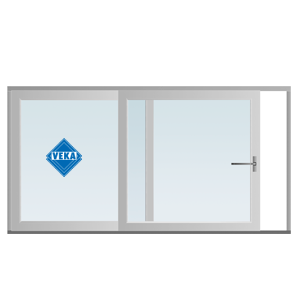
Four systems for different requirements
The final selection is made after measuring and reviewing the intended use.
Two- or three-track in-line sliding system for spaces where a hinged leaf is impractical.
View EkosolSmooth operation, two moving leaves and a solution focused on ease of use.
View Vekaslide Hi-5A higher proportion of glass and perimeter sealing to combine space, design and performance.
View Vekamove 76Lift-and-slide system for large glazed areas and a broad connection with outdoors.
View Vekamotion 82Decisions that change the result
A sliding door is designed as a complete assembly: system, dimensions, glass, hardware, threshold and execution of the lower junction.
Open your home towards the terrace
Tell us the opening size and how you want to use it. We will explain which system makes sense and which does not.
Discuss my project